The situation
The original request was for learning about eTIR procedures. It evolved into a public guidance site and explainer video because users also needed searchable information and a clear path to the documents relevant to them.
The work combined learning, communication and web delivery. We had a fixed allocation of days, changing content requirements and no access to UN infrastructure at the start. I made the project reviewable on a separate server, then supported deployment when UN IT was ready.
What made it hard
The brief changed shape before the contract was signed. It started as an e-learning module and became a website plus one video. The budget was a fixed number of days from the OSCE's 2020 funds, so it could be extended in time but never in money. The site had to run on UN Secretariat infrastructure, on the UN's standard CMS, which I could not touch at the start. My access to the staging server came through a VPN and firewall rules that took weeks to set up. The content owners were a small secretariat team, who were also preparing formal documents for intergovernmental sessions. Ideas for the site kept arriving from several people in both organisations. A hard date then appeared. UNECE wanted the site ready for a newsletter to all contracting parties on 5 February 2021, the week of the TIR Executive Board and WP.30 sessions.
How I worked
I began by asking who needed to understand eTIR, what each audience should do afterwards and where the information would live. I ran joint weekly reviews, used a shared Miro board for decisions and tested a working Drupal site before transferring it to UN infrastructure.
Decisions
-
Agree the output before the days
The request mixed structured learning with promotion. I asked where the line sat between them, and the brief settled on a website that hosts the information and one explainer video. A basic Drupal site and a short video would not need the full budget, and I said so. The OSCE offered to split the work, with the website in 2020 and the video on a second contract in January. In the end both went into one set of terms.
-
Start on my own server
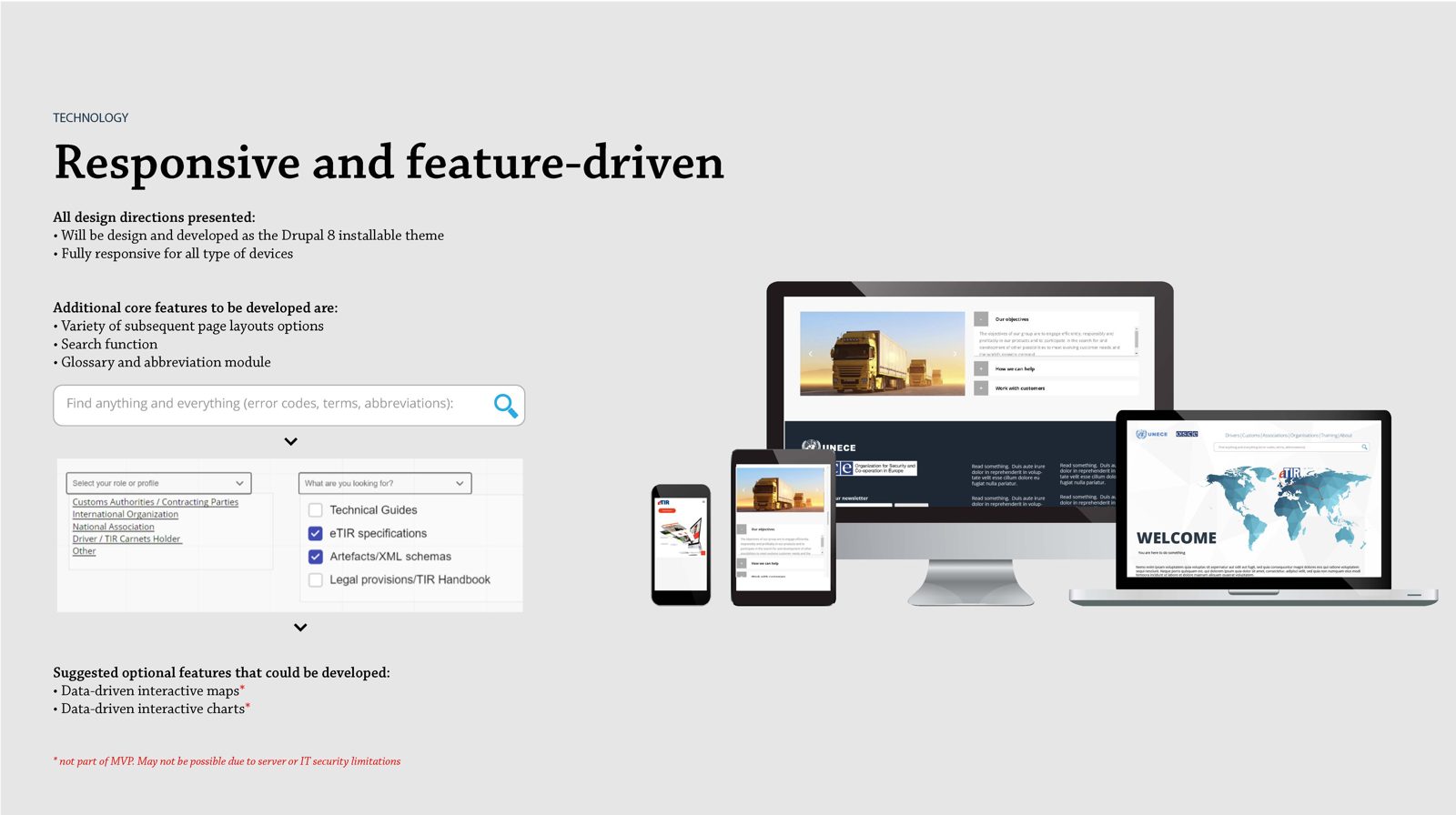
UN infrastructure was weeks away. I installed Drupal 8 on my own server so wireframes and design could start straight after the terms were approved.
-
Show three directions and let the client choose
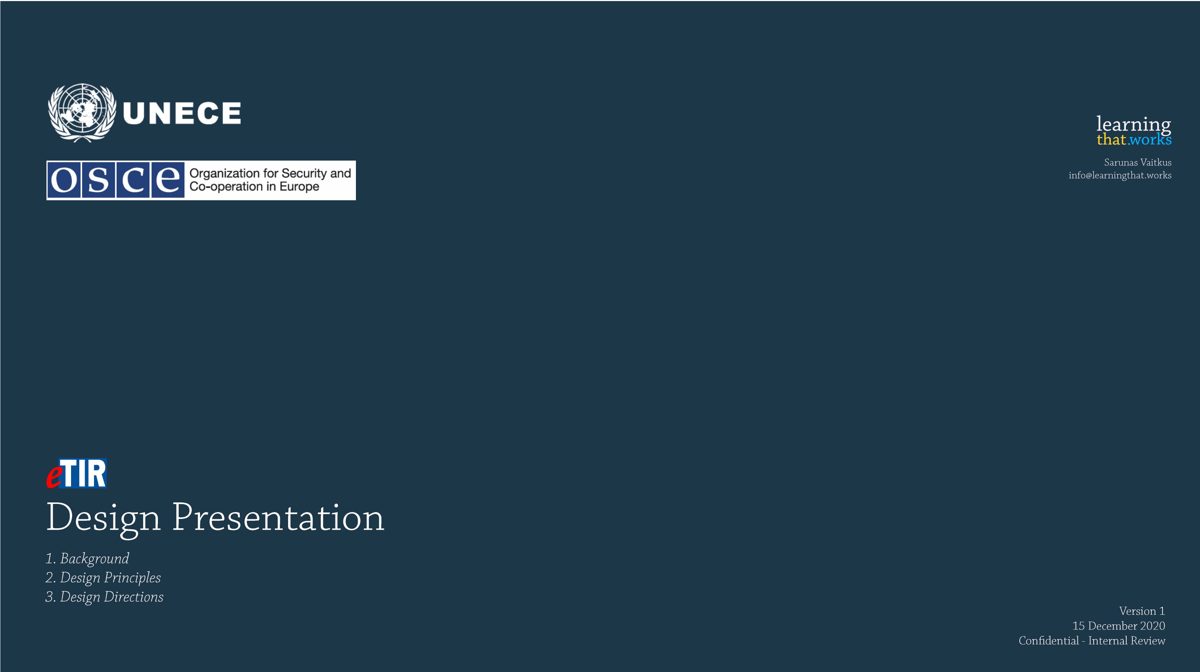
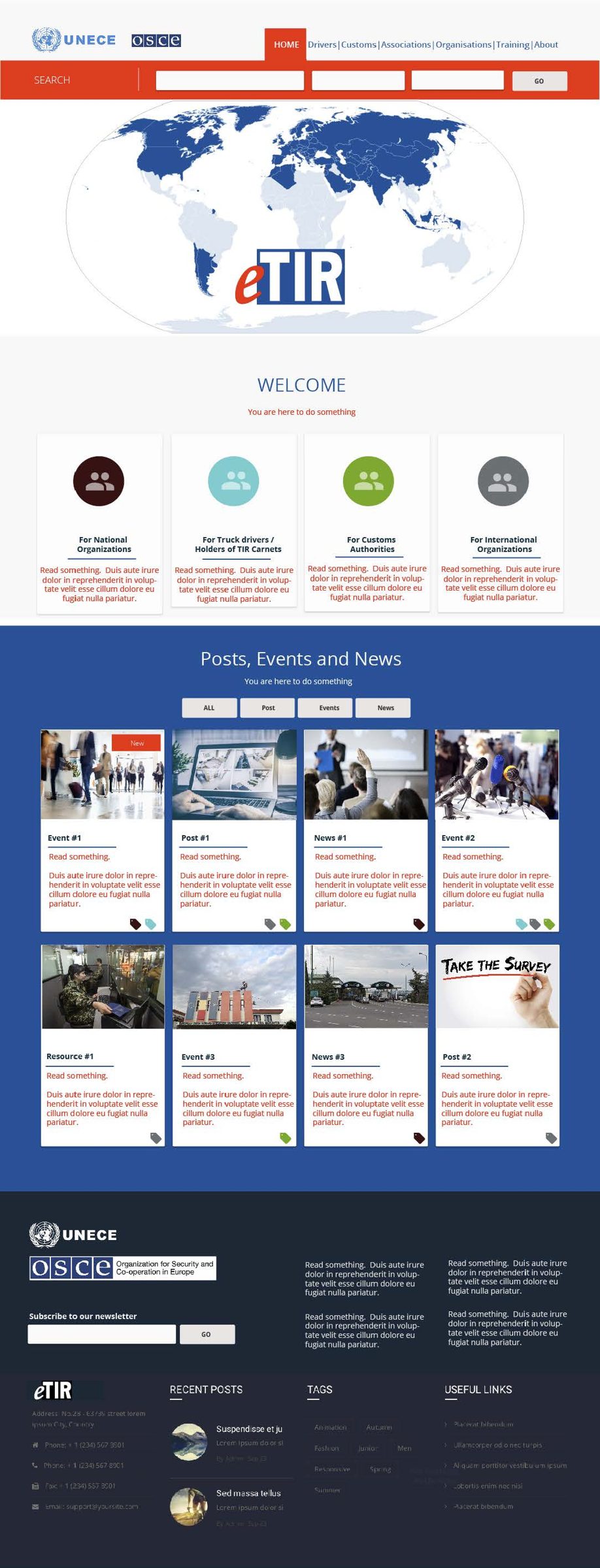
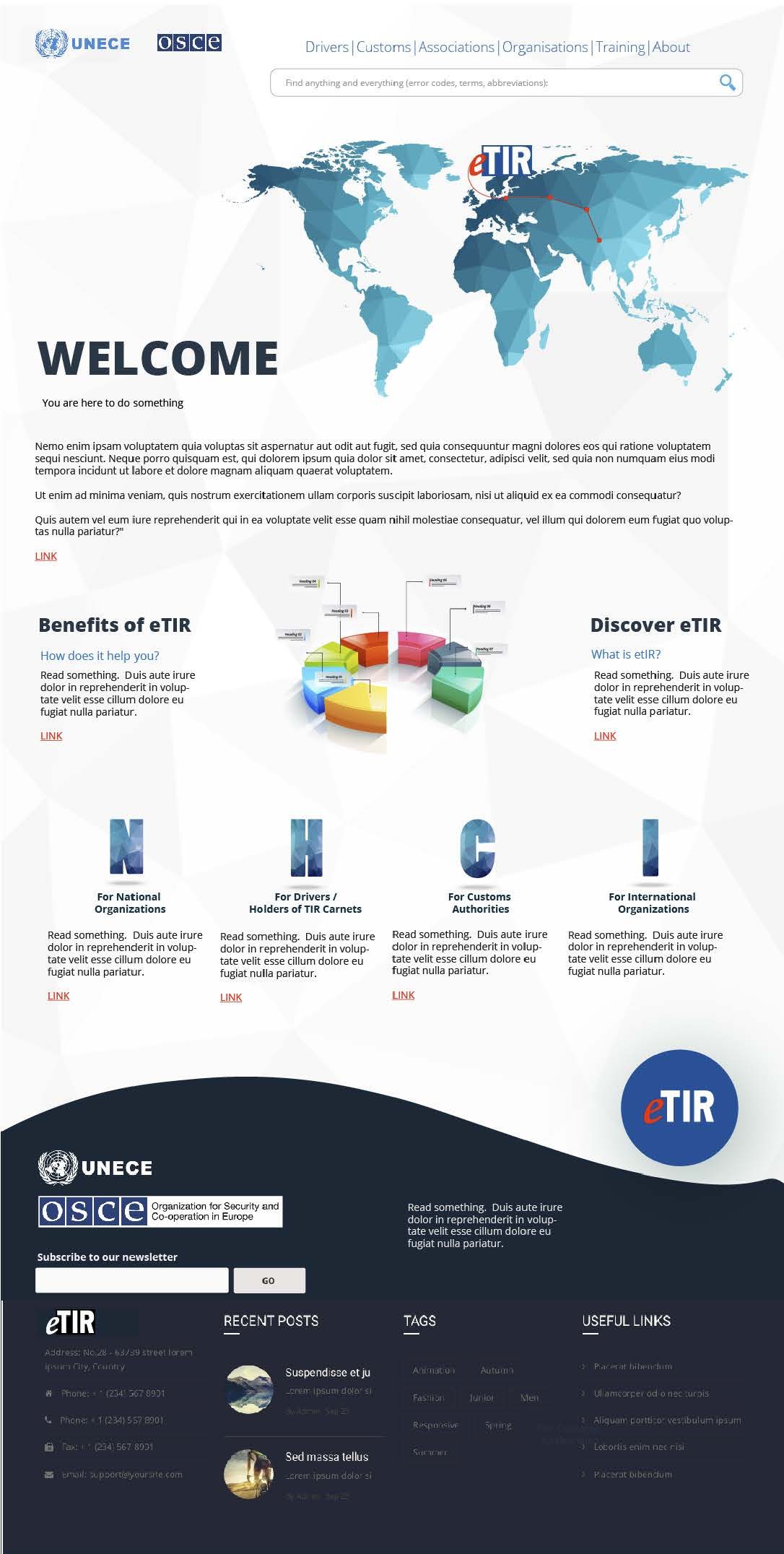
I presented three design directions and put them on Miro for comments from both organisations. Nearly everyone preferred Design 3, and their comments folded ideas from the other two into it.
-
Publish the documentation as HTML
The secretariat's technical documents existed as PDFs and as HTML. I chose the HTML versions, because the site search could then index the full text.
-
Move days from the video to the website
The website work was growing and the OSCE could not add funds. I raised it in writing, and we agreed to spend fewer days on the video and more on the site.
-
Hand over through Git
UN IT first proposed archive files. I asked for a working Git repository on the UN GitLab, so later fixes could be pushed and pulled. The database went across separately, as UN IT required.
-
Launch the minimum that works
With the 5 February date fixed, I proposed going live with the pages that were ready and hiding the rest. Fixes were split into what had to be ready that week and what could wait.
-
Content belongs to the content owners
Adding pages, images, posts and documents happens every week on a site like this. I passed those tasks to the secretariat and wrote how-to instructions for each one, so they did not depend on me.
-
Fix the video sound before polishing
The first narration sounded like someone reading a textbook. I recommended a professional voice-over, and UNECE found a narrator within the week.
Design: the site and the video
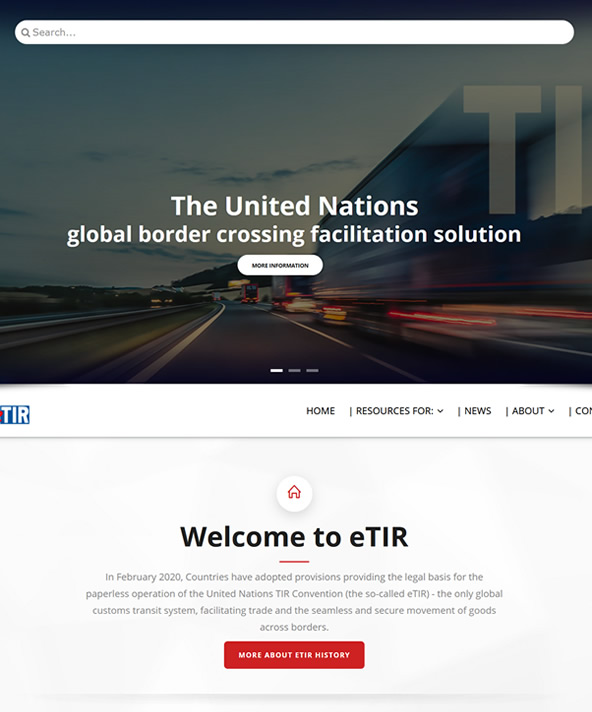
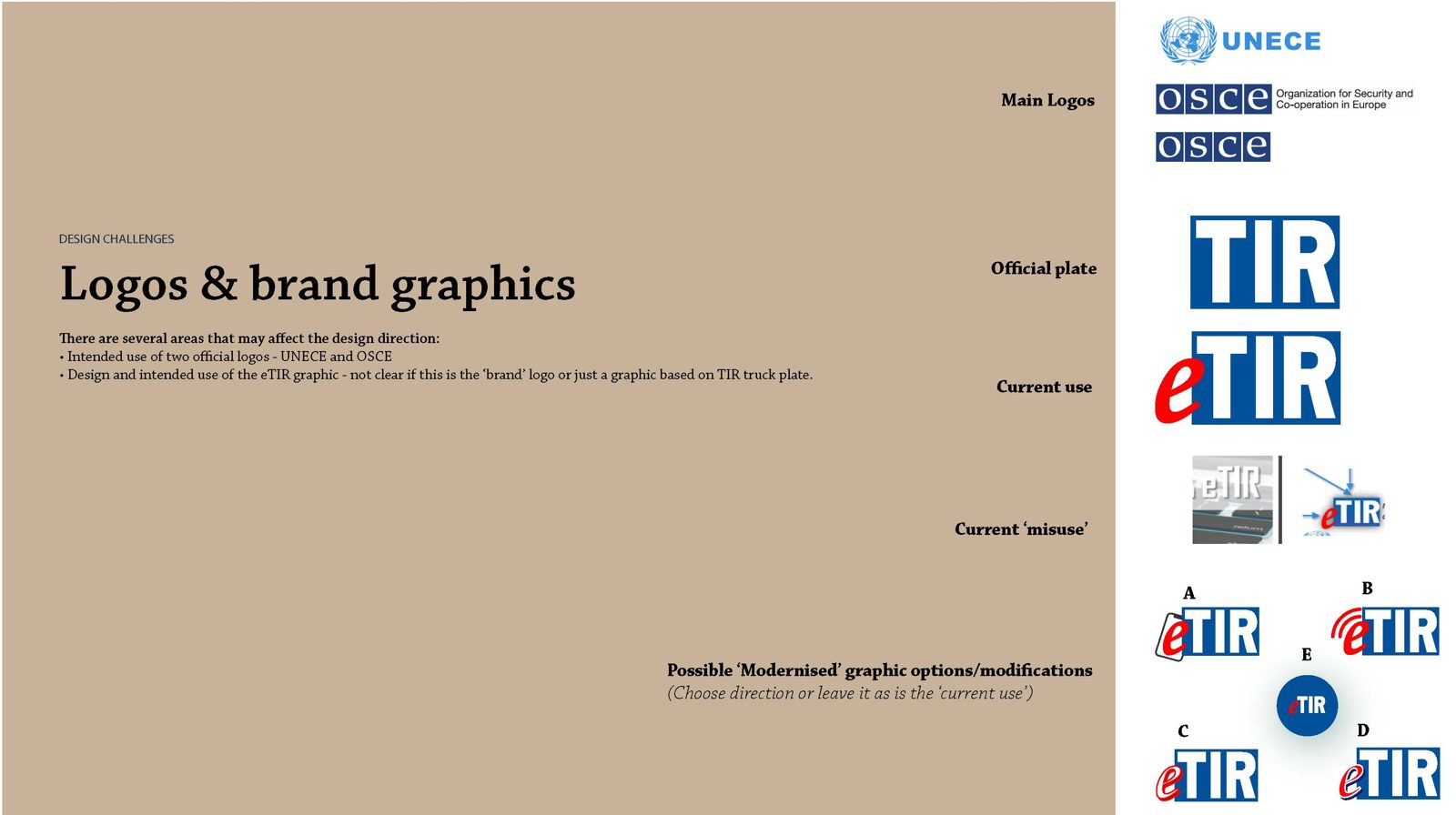
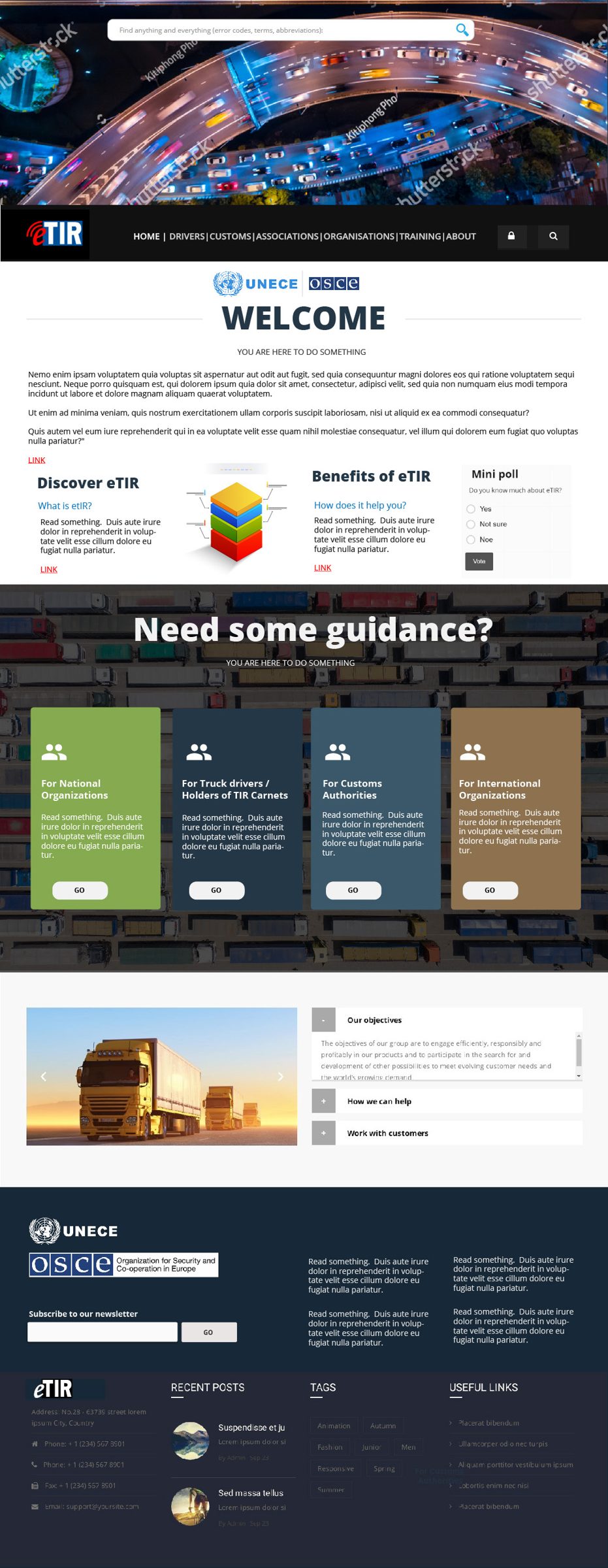
The UN's IT team set the graphical charter: a white background, with blue, grey and black as the main colours, and Myriad Pro or Arial for type. Inside that charter, the home page leads with a photo slider and three messages, then a "Choose your profile" block for the four main audiences: holders and eGuarantee users, customs authorities, national transport associations and the international organisation. Each profile opens its own page with the information and documents for that group. The secretariat's suggested colours for the four profiles fought with the rest of the page, so I designed an alternative palette and a set of icons for each audience, built from licensed vector elements. The team received the icons as editable vector files. Photos came from UNECE's stock library and their own collection. Background photos got a textured, grainy treatment, and I handed over Photoshop and Fireworks templates so the team could apply it to new images. The OSCE logo sits in the footer in its white version, as the OSCE asked.
The proposed menu was too long for small screens, so the deeper items moved into dropdowns. Below the profiles sit the benefits, a "Ready to join?" call to action, the brochure, a Posts, Events and News section, and documentation, support and training. Documentation is its own content type. Each document is tagged by type and audience, and its title feeds an autocomplete search, so a customs IT team can type an eTIR error code and land on the right page.
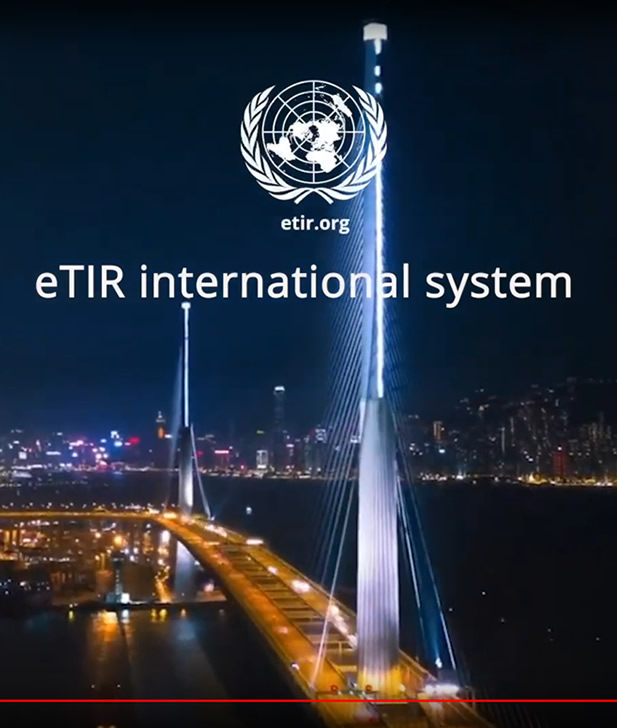
The video started from a script the TIR secretariat wrote. They also gathered recorded messages from UNECE leadership, the international organisation that runs TIR and customs officials, plus pilot footage from Uzbekistan Customs. Most of it was recorded remotely, so before filming I sent written guidance on sound, light and retakes. I storyboarded the scenes on Miro, then cut the footage, narration, music, titles and the animated eTIR data flow, which I built from the secretariat's PowerPoint animations. Captions were added at the request of UNECE's communications team, because the video plays on screens with the sound off.
Problems I hit and how I solved them
- A brief that kept changing. The project began as an e-learning module and became a website and a video. I wrote down the stages and outputs, and the final terms named two deliverables.
- No server to build on. The UN staging server arrived in late January, and VPN access took longer. I built and reviewed the whole site on my own server and moved it across when the UN side was ready.
- A first deployment that failed. On staging the pages would not load. One cause was mine: the default Drupal .htaccess file was missing from the repository, and I added it. The others were on the server. I listed them for UN IT: file permissions under SELinux, a database connection that dropped on large writes, an old Drush version and no SSL. The database problem was fixed on 9 February. The site then ran on Drupal 8.9.13, with every page and the search working.
- A fixed public date. The site was due in front of the TIR Executive Board and WP.30 while staging was still being repaired. UNECE showed the delegates my development copy instead, and the demonstration went well.
- Deleting tags broke the profile pages. After handover, renaming and deleting tags in the admin area emptied the four profile pages. The listing blocks did not check whether a tag still existed. The code was changed, so editors can now add, rename and delete tags safely.
- A search error after go-live. In May, searching some terms led to an error page. A deleted documentation tag had left an empty path in the database. A template fix made the search ignore empty paths, and I told the team to remove documentation through the content list rather than the tag list.
- Losing Git access. My access to the UN repository broke twice. The fixes went to UNECE as files with instructions for where to place them, so the work kept moving.
- Scope growing on a fixed budget. Extra requests kept arriving. I raised it early and in writing. The OSCE extended the same contract twice, to the end of March and then to the end of April, with no change in budget. The work closed in mid-May.
- Uneven video footage. Clips came from webcams and phones with very different sound and picture quality. I asked for retakes where it mattered, used an earlier eTIR video to fill missing shots, and colour corrected and balanced the sound across the final cut.
- An editable project that would not open. UNECE's copy of the Premiere Pro project was missing a font and a motion graphics file. I sent the font source, step-by-step instructions and the missing file, and the project opened on their machine.
What I shipped
- The eTIR information website, which I created and designed, built on Drupal 8 and live on etir.org
- Three design directions, a live mock-up and the final customised Drupal theme, built to the UN graphical charter
- Four audience pages with their own icons, delivered as editable vector files
- A documentation content type with audience and type tags, full-text search and autocomplete
- News, publications and contact pages, with the OSCE partnership credited
- A Git repository on the UN GitLab, a database export and setup notes for UN IT
- "QuickGuideToDrupal-eTIR", an admin guide of more than 30 pages for the secretariat
- A six-minute explainer video in two versions, with and without burned-in captions, plus an SRT caption file
- The full Premiere Pro project with all assets, so UNECE can update the video
My part
- Scoping, and input to the terms of reference
- Information architecture, wireframes and visual design
- Drupal build and theme
- Deployment support for UN IT, and the fixes after handover
- Content structure and the documentation tree for each audience
- Remote recording guidance, storyboard, video editing, animation and captions
- The admin guide and how-to instructions for the secretariat
- Weekly meetings and day-to-day communication with the OSCE and UNECE
Results
- 4
- audience pages, still on etir.org at the addresses set up in 2021
- 2
- intergovernmental bodies shown the site in February 2021: the TIR Executive Board and WP.30
- 4,000+
- views of the video on UNECE's YouTube channel by October 2026
The site went live on etir.org in May 2021, and UNECE published the video on 25 May 2021. The same month, the secretariat's progress report to the eTIR group of experts listed the new website and video among the year's results. In its closing note, UNECE called the two deliverables the cornerstone of its eTIR promotion campaign. Five years on, etir.org is still UNECE's eTIR website. The secretariat publishes news on it, and it has since moved to Drupal 10. In 2025 UNECE asked me to upgrade the eTIR site to Drupal 11 alongside SITCIN, and I agreed the terms in July. UNECE later took eTIR out of that scope, so the contract that followed covered SITCIN only.
What I would do again, or differently
- Settle what is learning and what is promotion before agreeing the days.
- Put server access, versions and the deployment process into the terms of reference. That part took more time than the design.
- Use a live Git repository from day one, with configuration kept in code, the way UN IT deploys.
- Make risky admin actions safe in the code. A warning in the guide is not enough.
- Send recording guidance before anyone films, and ask for a pilot clip first.