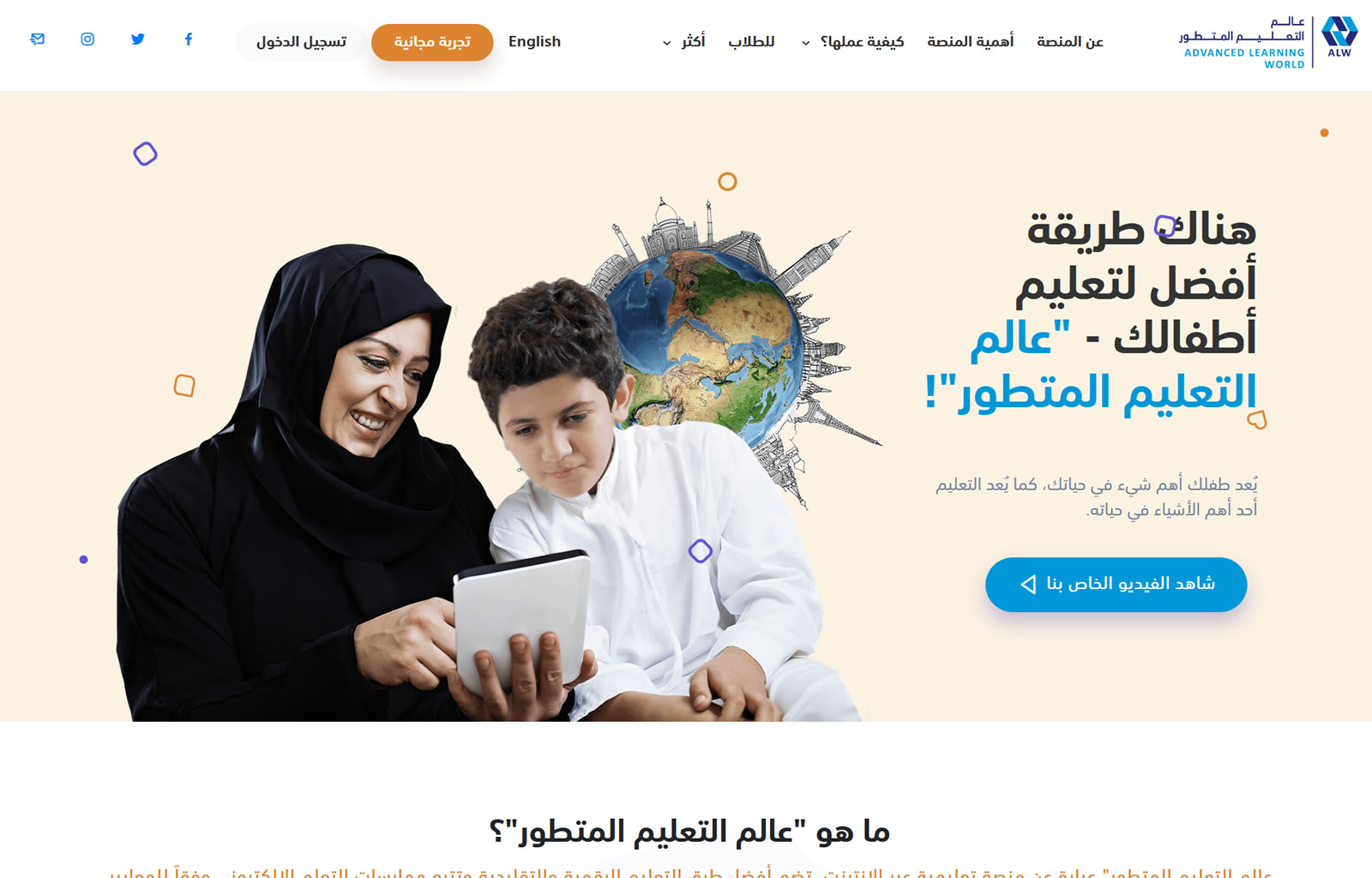
The situation
ALC had planned a digital learning service for Saudi school students for years. When COVID-19 closed the schools in spring 2020, the plan became urgent. Parents needed something their children could use at home, built on the national curriculum, in Arabic and English, with real teachers involved.
The programme needed to support students, parents and mentors in both Arabic and English. I translated those needs into the content model, platform requirements, sample learning materials and testable workflows, while EPAM developed the product.
What made it hard
The deadline and budget were fixed. ALC had no in-house learning technology team. The critical task was to keep curriculum, user workflows, vendor decisions and the bilingual interface aligned while a remote team worked across five countries.
Decisions
-
Adapt a proven platform and pilot with real schools
The first build had lost time in 2016 by starting from scratch with no real users. I recommended a learning experience platform on existing technology: student experience first, learning data tracked from day one, and one shared content library.
-
Make one scope sheet the master document
EPAM's draft statement of work described scope in general terms. I proposed that the detailed scope spreadsheet become the reference for every change request and defect. The CEO agreed, and most arguments about scope were settled before they started.
-
Ship a smaller first release
We took tutors and parent changes to the learning path out of the first release, and kept text-message login and smart TV support out.
-
Ask for the workflows behind the screens
Design screens were arriving without the workflows behind them. I raised it, which led to a scope meeting with EPAM leadership and a joint plan of user stories by sprint.
-
Upload only approved lessons
I agreed a go-live rule: test uploads for teacher review first, then one clean bulk upload of approved lessons only.
What shipped
- Student, parent, mentor and admin accounts, with parent invitations
- Learning paths, subject pages and a weekly lesson plan
- Live classes and one-to-one mentor sessions through Zoom
- A SCORM lesson player, video playback and authoring inside the platform
- Dashboards, badges for units completed on time, and notifications
- Subscriptions, coupons and online payment
- A full Arabic and English interface
My part
- The content structure: grade, subject, unit, topic and lesson, with each lesson in five short parts from warm-up to reinforcement
- A shared glossary and a working wireframe of the student and parent areas during discovery
- A model lesson in Storyline 360, and how lessons report progress to the platform
- The brief for the content vendor and the first quality check of its lessons
- The curriculum master sheet used to load every subject, unit and lesson
- The translation workflow for system text
- The company website, the product landing page and analytics
Results
Delivery began on 18 May 2020 and the platform ran in production on 9 September. I distinguish that date from the December full MVP release and the later public launch.
- 5 countries
- in the remote team that took the platform from discovery to production
- 16 Dec 2020
- full MVP release, two weeks before my contract ended
Commercial sales started on 30 September 2020 through a partner channel. ALC dates the public launch to 2021, under new leadership. The platform has been redesigned since then, with additions such as an AI tutor, so today it looks and works differently from the 2020 version. At the end of my contract the CEO thanked me in writing for the platform, the educational content, the website and the sample lessons.
He played a key role in shaping a novel service providing digital education for school students across the country.
What I would do again, or differently
- Agree the commercial model and target user early. When sales later moved from parents to partners, the product needed changes.
- Keep student engagement in the first release. Parents pay, but students determine whether the learning experience is used.
- Treat lesson standards, tracking and upload rules as part of platform delivery, not tasks for after launch.